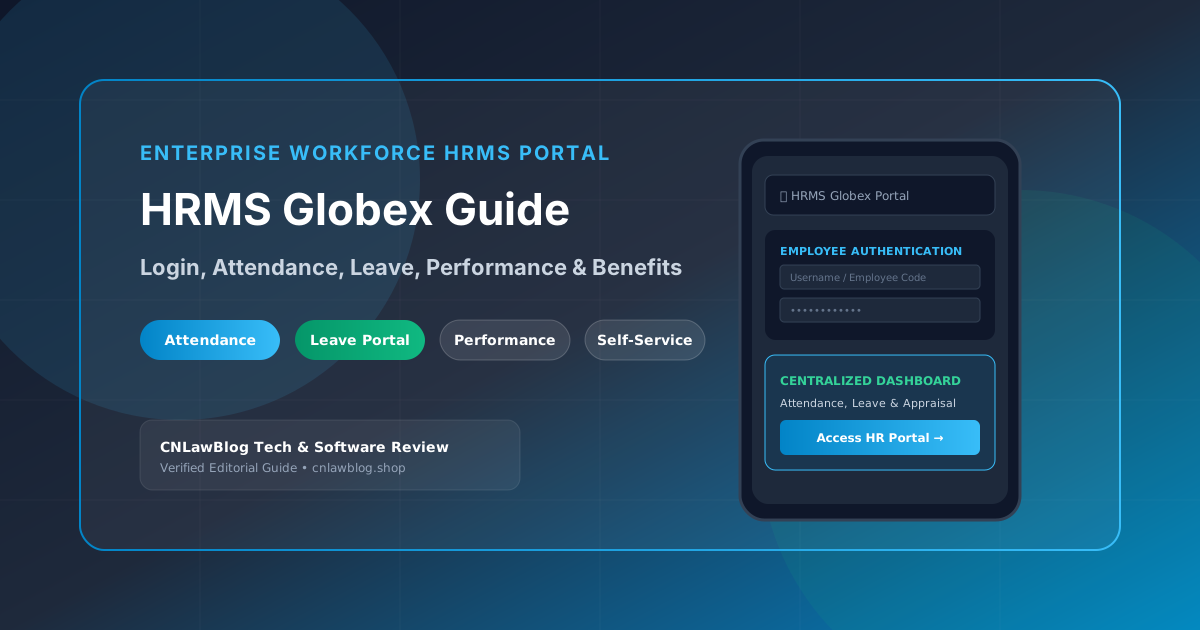
If you have searched for HRMS Globex, there is a good chance you are looking for information about the Globex employee HR portal, its login process, available HR functions, or the way employees use the system for routine workplace tasks.
HRMS stands for Human Resource Management System. In simple terms, an HRMS brings employee-related processes into a centralized digital platform instead of requiring HR teams and employees to depend entirely on paperwork, spreadsheets, emails, or separate systems.
This guide explains what HRMS Globex is, the types of functions an employee HR portal can provide, how the login process works, what users may be able to do after signing in, and what to do when access problems occur.
What Is HRMS Globex?
HRMS Globex is a Human Resource Management System associated with the Globex employee portal.
The purpose of an HRMS is to organize employee and HR-related information in one digital environment.
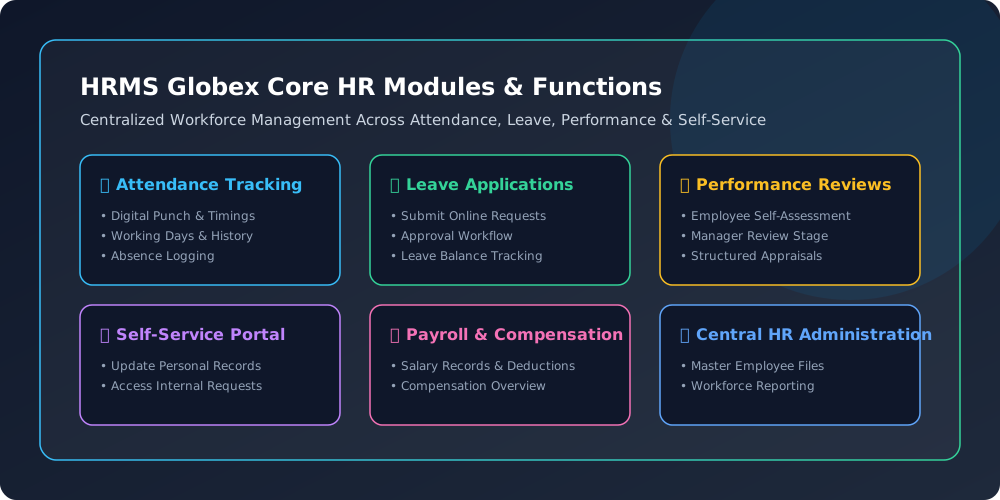
Depending on an employee's role and the modules enabled by their organization, an HRMS can support processes such as:
- Employee information management
- Attendance
- Leave requests
- Payroll-related information
- Performance management
- Employee self-service
- HR reporting
- Internal administrative processes
The exact options available to an individual user can vary according to their organization, permissions, and role.
The HRMS Globex login page provides a dedicated interface where authorized users can enter their username and password. It also includes a Forgot Password option.
Why Are People Searching for HRMS Globex?
The keyword HRMS Globex can represent several different search intentions.
Some users may simply want to find the employee login page. Others may need help understanding the system or accessing a particular HR function.
Common searches include:
- HRMS Globex login
- HRMS Globex employee portal
- HRMS Globex login page
- HRMS Globex password reset
- HRMS Globex employee code
- HRMS Globex attendance
- HRMS Globex leave application
- HRMS Globex performance management
- HRMS Globex HR portal
- HRMS Globex employee services
Understanding this search intent is important because the portal is not simply an informational website. For authorized employees, it functions as a workplace HR system.
HRMS Globex Login
The HRMS Globex portal provides a login screen with fields for:
- Username
- Password
There is also a Forgot Password? option for users who cannot remember their credentials.
How to Access the HRMS Globex Portal
The general login process is straightforward:
- Open the authorized HRMS Globex portal.
- Locate the login section.
- Enter your authorized username.
- Enter your password.
- Submit the credentials.
- If the credentials are correct, the system will take you to the available employee or HR dashboard.
The login area is intended for authorized users. Employee information and internal HR functions are protected behind the authentication system.
Important Login Tip
Always make sure you are using the correct HRMS Globex portal before entering employee credentials.
Avoid entering your username or password into websites that merely claim to provide HRMS Globex login services. When dealing with employee information, using the correct portal is especially important.
What Happens If You Forget Your HRMS Globex Password?
The HRMS Globex portal includes a dedicated password-recovery option.
The password-reset interface asks users for an Employee Code as part of the recovery process.
A typical recovery process is:
- Open the HRMS Globex login page.
- Select Forgot Password?
- Enter the requested employee code.
- Follow the instructions provided by the system.
- Complete the password-reset process.
- Return to the login page and sign in with the updated credentials.
If the automated process does not work, employees should contact their organization's HR or designated system administrator rather than attempting to bypass the login system.
What Can Employees Do Through HRMS Globex?
The exact dashboard can vary by organization and employee role.
However, HRMS platforms are generally designed to bring routine employee processes into a single system.
Depending on the modules enabled for a particular organization, employees may encounter functions related to the following areas.
Employee Information Management
One of the basic purposes of an HRMS is keeping employee information organized.
This can include information such as:
- Employee identification details
- Contact information
- Employment information
- Department details
- Organizational role
- Other HR records
Centralizing this information can make it easier for authorized HR personnel to maintain accurate employee records.
Employees may also be able to review or update certain information, depending on their permissions.
Attendance Management
Attendance is one of the most common HR functions handled through an HRMS.
Instead of relying entirely on manual attendance registers, organizations can use digital systems to maintain records related to employee attendance.
Depending on the organization's configuration, employees may be able to view information such as:
- Attendance records
- Working days
- Absences
- Attendance history
- Related status information
The exact attendance options available in HRMS Globex depend on the employer's implementation.
Leave Management
Leave management is another common reason employees use an HRMS.
A digital leave system can allow employees to submit requests without sending separate emails or physical forms to HR.
A typical workflow involves:
- Opening the leave section.
- Selecting the appropriate leave type.
- Choosing the requested dates.
- Adding any required information.
- Submitting the request.
- Waiting for approval from the designated manager or HR authority.
The exact names and placement of leave modules may differ depending on how the organization has configured the portal.
Performance Management
Performance management is an important part of an HRMS.
A digital performance-management system can support structured employee review workflows.
Performance-management activities can include:
- Employee self-review
- Reporting-manager review
- Final review
- Review acceptance
- Performance documentation
The exact process depends on the organization's appraisal structure.
For employees, having these activities within an HR system can make performance reviews easier to track than relying on disconnected documents or emails.
Employee Self-Service
Employee self-service is one of the most useful concepts behind modern HRMS platforms.
Instead of asking HR for every small administrative request, employees can potentially access certain information themselves.
Depending on permissions, this can include:
- Personal information
- Attendance details
- Leave information
- Performance records
- HR documents
- Internal requests
The purpose is simple: reduce unnecessary administrative work while giving employees more visibility into their own information.
Payroll-Related Information
Payroll is another major function commonly associated with HR management systems.
An HRMS can help organizations maintain information connected with:
- Salary
- Deductions
- Payroll records
- Compensation
- Employee benefits
- Salary-related documents
However, employees should only assume a specific payroll feature is available if it is enabled by their employer.
The public login page does not display the private employee dashboard, so not every internal module can be confirmed from the login screen.
HRMS Globex Performance Reviews
Performance reviews deserve special attention because a structured HRMS can make the appraisal process easier to manage.
A performance-management workflow can involve several stages.
These may include:
- Employee self-assessment
- Manager assessment
- Review and approval
- Final evaluation
- Maintaining historical performance information
A digital performance system can make it easier for organizations to manage these stages in a consistent way.
For employees, this may mean completing self-review forms, reviewing feedback, and tracking appraisal-related tasks from the same platform.
HRMS Globex for HR Teams
HRMS software isn't only designed for employees.
HR departments can use an HRMS to organize workforce information and reduce repetitive administrative work.
Potential HR use cases include:
- Employee record management
- Attendance administration
- Leave processing
- Performance reviews
- Workforce reporting
- Employee information updates
- Internal HR workflows
The advantage of centralization is that HR teams can spend less time searching through disconnected records and more time on employee-focused activities.
HRMS Globex for Managers
Managers can also interact with HRMS systems differently from regular employees.
Depending on their assigned permissions, managers may have access to:
- Team information
- Leave approvals
- Attendance information
- Performance reviews
- Employee-related workflows
- Reports
The exact dashboard depends on the organization's role-based access settings.
That means two employees may not see identical menus after logging in.
Benefits of Using an HRMS
A well-configured HRMS can provide several practical benefits.
Better Organization
Employee information is maintained within a centralized digital environment.
Less Manual Work
Routine processes such as leave requests and employee updates can be handled electronically.
Faster HR Processes
Digital workflows can reduce unnecessary paperwork and back-and-forth communication.
Improved Employee Access
Employees can access permitted information without contacting HR for every routine question.
Better Record Keeping
Digital records can make it easier to maintain and retrieve employee information.
More Consistent Workflows
Standardized processes can reduce confusion about how common HR requests should be submitted and processed.
HRMS Globex and Data Security
HR systems handle sensitive information, which makes security particularly important.
Employee HR records can contain personal and employment-related information that should not be publicly exposed.
Employees should therefore follow basic security practices:
- Never share your password.
- Avoid using public computers for sensitive HR tasks.
- Log out after using a shared device.
- Don't save credentials on computers you don't control.
- Verify the website before entering credentials.
- Report suspicious login activity to your organization.
- Use only authorized HRMS links provided by your employer.
A secure HR environment depends not only on the software but also on how users handle their credentials.
What If HRMS Globex Is Not Working?
Sometimes users may experience problems while accessing an HR portal.
Common issues include:
- Incorrect username
- Incorrect password
- Forgotten credentials
- Browser problems
- Temporary server issues
- Account restrictions
- Network problems
- Expired access
- Organization-level configuration issues
Before assuming the entire HRMS is unavailable, try a few basic checks.
Check Your Internet Connection
Make sure the device has a stable connection.
Verify Your Credentials
Check that the username and password were entered correctly.
Use Password Recovery
If you forgot your password, use the portal's password-recovery option and provide the requested employee information.
Try a Different Browser
If the page doesn't load correctly, testing another modern browser can help identify a browser-specific issue.
Contact HR or the Administrator
If the account remains inaccessible, your organization's HR or system administrator is usually the right point of contact.
HRMS Globex vs. Traditional HR Processes
Traditional HR management often depends on spreadsheets, paper forms, emails, and separate records.
An HRMS changes this workflow by centralizing information.
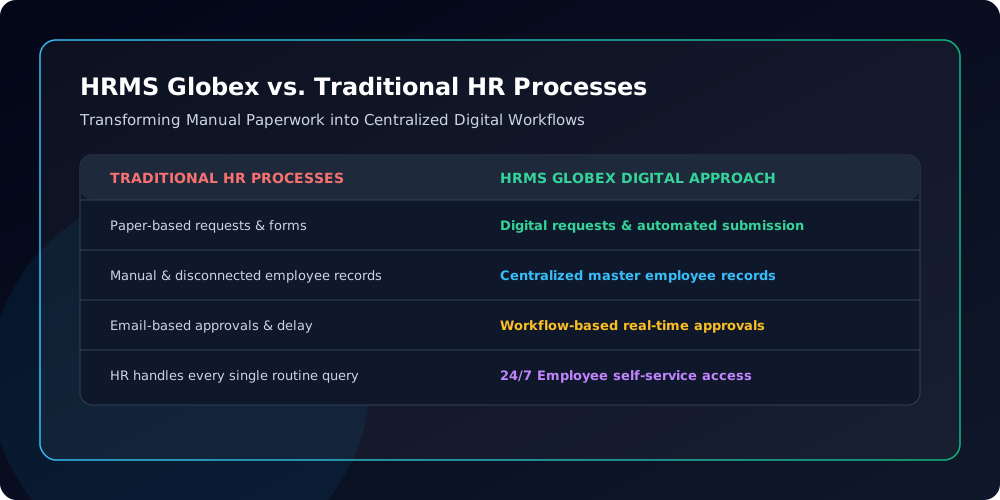
| Traditional HR | HRMS Approach |
|---|---|
| Paper-based requests | Digital requests |
| Manual employee records | Centralized employee records |
| Email-based approvals | Workflow-based approvals |
| Separate documents | Centralized information |
| Manual reporting | System-generated reports |
| HR handles every routine request | Employee self-service |
The exact capabilities depend on how an organization implements its HRMS.
Is HRMS Globex an App?
HRMS Globex is accessible through a web-based portal.
The public-facing system provides a browser-based login page.
Whether an organization provides additional mobile access or other interfaces can depend on its specific HRMS configuration.
It is therefore better not to assume that every employee has access to the same mobile features.
Is HRMS Globex Only for Employees?
No.
An HRMS can serve several user groups.
These can include:
- Employees
- HR professionals
- Managers
- Administrators
Each role may receive different permissions.
For example, an employee may only see personal information and self-service functions, while an HR administrator may have broader access to workforce records and reports.
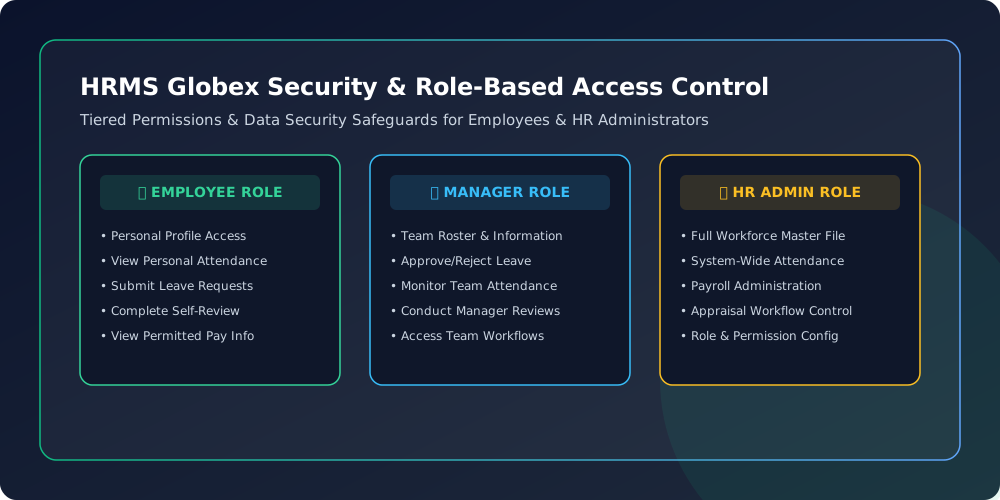
Why Role-Based Access Matters
HR platforms contain sensitive employee data.
A system that allows every user to access every record would create obvious privacy and security problems.
Role-based access helps organizations limit what users can see or change.
For example:
Employee: personal records and permitted self-service functions.
Manager: relevant team information and approval workflows.
HR administrator: broader employee and HR management functions.
The actual permissions depend on the employer's configuration.
HRMS Globex and Performance Management System
The performance-management component of an HRMS can help create a more structured process for employee evaluations.
A performance-management module can help organizations:
- Set review stages
- Collect employee feedback
- Record manager evaluations
- Maintain review history
- Manage appraisal-related documentation
Instead of keeping reviews in separate files, an organization can manage stages within a centralized workflow.
This can make it easier to maintain:
- Review records
- Employee self-assessments
- Manager evaluations
- Final reviews
- Acceptance records
Common Questions About HRMS Globex
What is HRMS Globex?
HRMS Globex is a web-based Human Resource Management System used for employee and HR-related processes.
Where can I log in to HRMS Globex?
The HRMS Globex portal provides a dedicated login page where authorized users can enter their username and password.
What credentials are needed for HRMS Globex?
The login page requires authorized credentials, including a username and password.
How can I reset my HRMS Globex password?
Use the Forgot Password? option on the login page and follow the password-recovery instructions. The recovery process requires employee identification information.
What is an employee code in HRMS Globex?
An employee code is used by the password-recovery process to identify the employee requesting access assistance. If you don't know yours, contact your HR department or system administrator.
Does HRMS Globex manage performance reviews?
HRMS platforms can support performance-management workflows, including employee self-assessment, manager review, and other appraisal-related processes depending on organizational configuration.
Can HRMS Globex manage attendance?
Attendance management is a common HRMS function. The exact attendance features available to a user depend on how the employer has configured the system.
Can employees apply for leave through HRMS Globex?
Leave management can be included within an HRMS. The precise workflow and available leave types depend on the organization's implementation.
Can employees access salary information?
Payroll-related functions can be integrated into an HRMS, but the specific salary or payslip features visible to an employee depend on the organization's configuration and permissions.
Why can't I access my HRMS Globex account?
Possible causes include incorrect credentials, forgotten passwords, browser issues, network problems, account restrictions, or organization-level access settings.
What should I do if HRMS Globex is down?
First check your internet connection and try refreshing the page. If the problem continues, contact your organization's HR or HRMS administrator to determine whether there is a system-wide issue.
Can every employee see the same HRMS Globex dashboard?
Not necessarily. HRMS platforms commonly use role-based permissions, meaning the available modules can differ between employees, managers, HR personnel, and administrators.
Tips for Using HRMS Globex Effectively
If you regularly use the portal, a few habits can make the experience easier.
Keep Your Credentials Secure
Never share your HRMS password with colleagues or other people.
Keep Employee Information Updated
If the system allows you to update personal information, check your records periodically and report incorrect information to HR.
Check Leave Records
Review submitted and approved leave requests so you know whether your requests have been processed.
Review Performance Tasks
If your organization uses the performance-management module, complete self-review tasks before the stated deadline.
Use Official Support Channels
When an account or employee record needs to be corrected, HR or the designated administrator should handle the change.
Final Thoughts on HRMS Globex
HRMS Globex is a centralized digital HR platform designed to support employee and human-resource management processes.
For employees, the system can provide a single place to access authorized HR services instead of depending entirely on manual processes.
The portal provides a browser-based login system using authorized credentials, along with a password-recovery option for users who need help accessing their accounts.
Depending on how an organization has configured the platform, users may encounter functions related to employee records, attendance, leave, payroll information, performance management, reporting, and other HR processes.
The most important thing to remember is that HRMS Globex is an organization-controlled employee system. The features visible after login can differ according to your role, permissions, and employer configuration.
If you are trying to access the portal, use the authorized HRMS Globex login page, keep your credentials private, and use the password-recovery option if necessary. If a problem cannot be resolved through the portal, your organization's HR department or HRMS administrator is the appropriate source of support.
For employees and HR teams, the real value of an HRMS is straightforward: bringing everyday workforce processes into one organized digital environment, reducing unnecessary manual work, and making routine HR information easier to manage.